
Turning what ops was doing by hand for four clients into a real product
Role
Team
Timeline
Scope
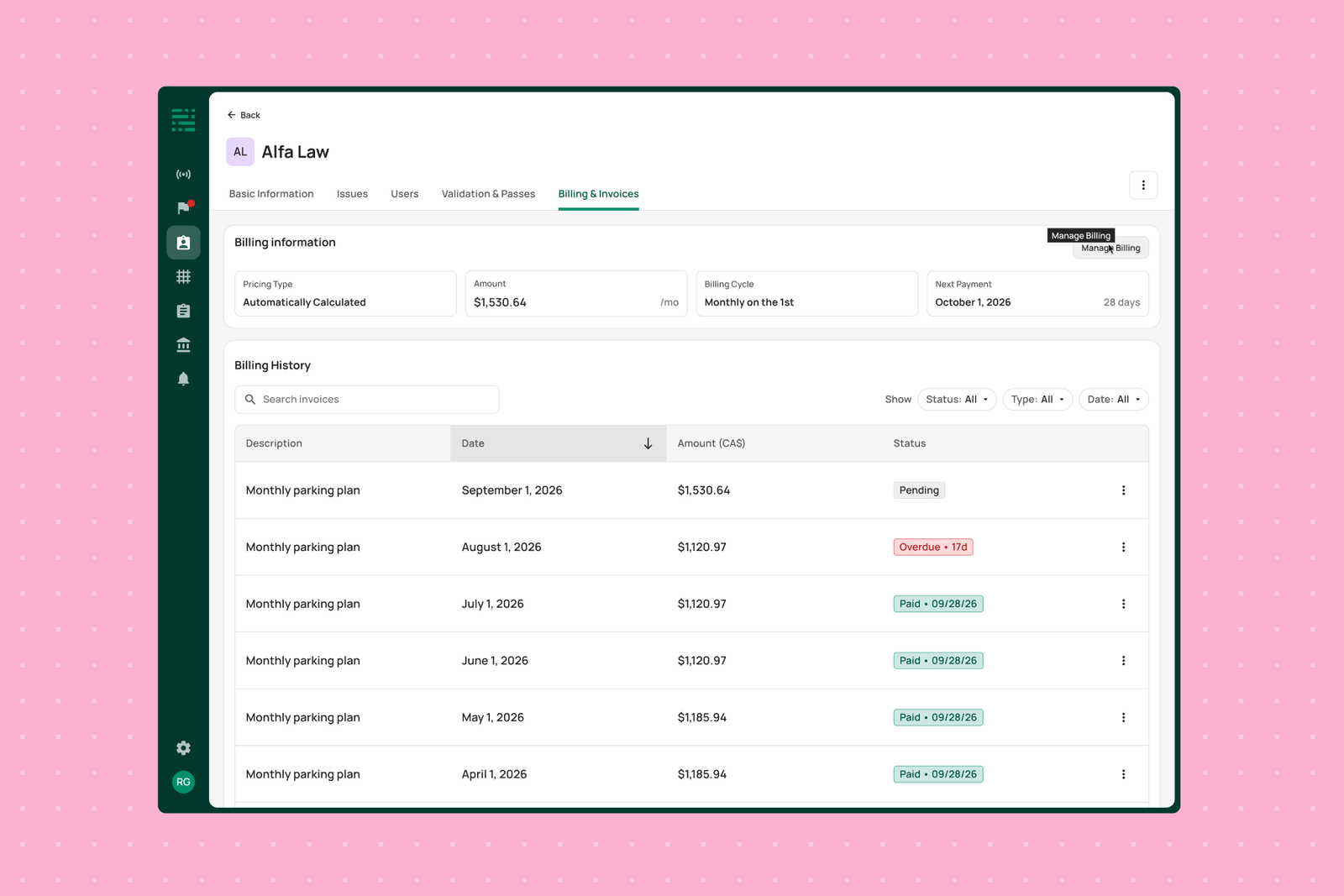
Impact overview
4 of 4
original clients adopted the product
$4M
in potential revenue from the new feature set
45%
of monthly bookings now run through the product
The workaround that became the business case
This product started with watching what our own team was already doing to keep four large clients happy.
Those clients needed something the platform didn’t have yet, a way to manage parking for a whole company’s employees instead of one booking at a time. In the meantime, ops held it together by hand, with spreadsheets and docs to track who had a spot and manual updates in the portal to make bookings match reality. It worked, but every one of those clients added a recurring, growing chunk to ops’ workload.
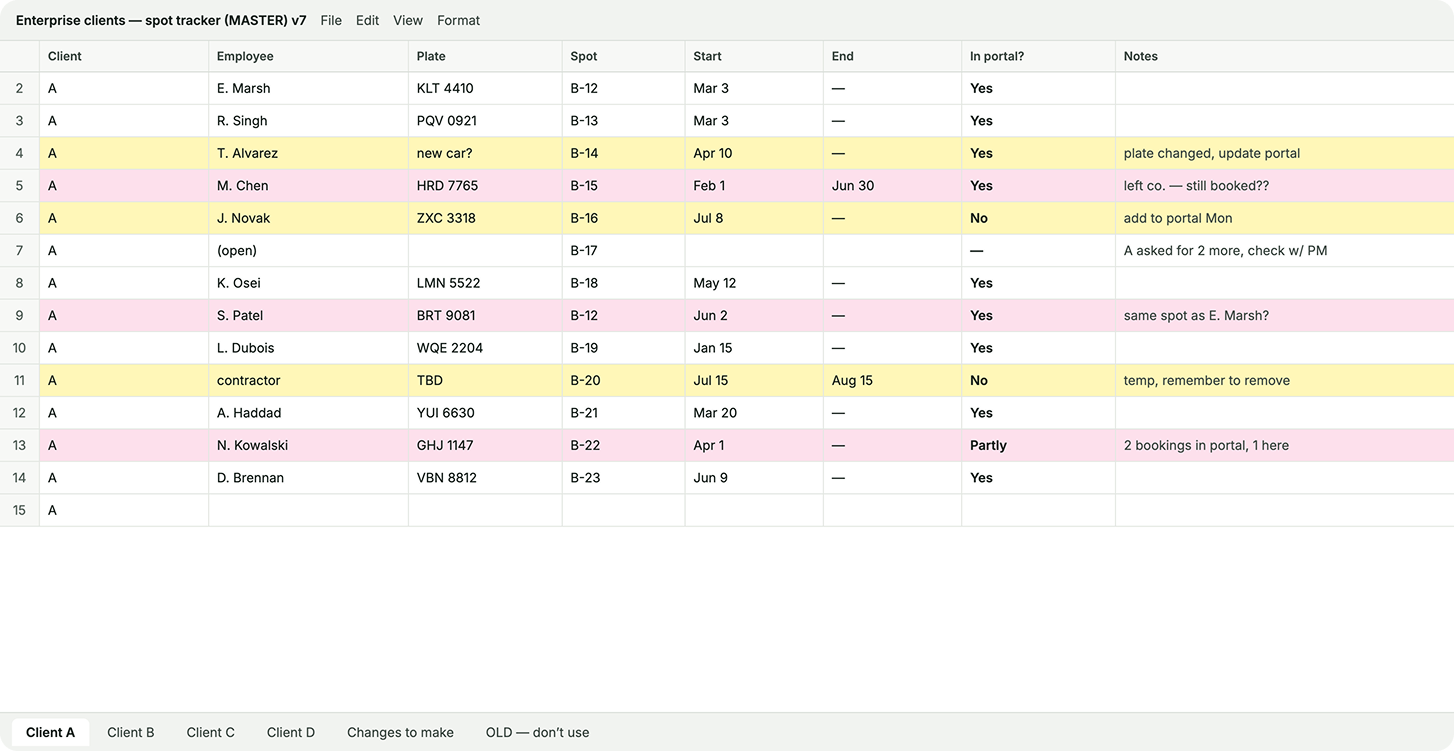
While digging through our booking data, I found the number that made the case: 45% of our monthly bookings came directly from these enterprise style clients. Nearly half the business was running on manual workarounds, and more potential clients were waiting on the exact features that would let them sign on.
Getting inside the workflow
I shadowed ops as they managed these clients and had them log every related task for a full month. The log showed about 6 hours of work and 6 new emails a month going to these four clients alone. I also surveyed the clients directly.
Three groups came out of it, with very different and sometimes competing priorities:
- Property managers wanted to stay out of it entirely. Their goal was maximizing profit and tenant satisfaction, not spending their time on parking admin.
- Tenant admins (the businesses renting the spots) had to onboard and offboard employees constantly, since turnover was high. Every change was manual and fell to whoever handled admin at that company.
- Employees wanted one thing: a guaranteed spot with no risk of getting towed.
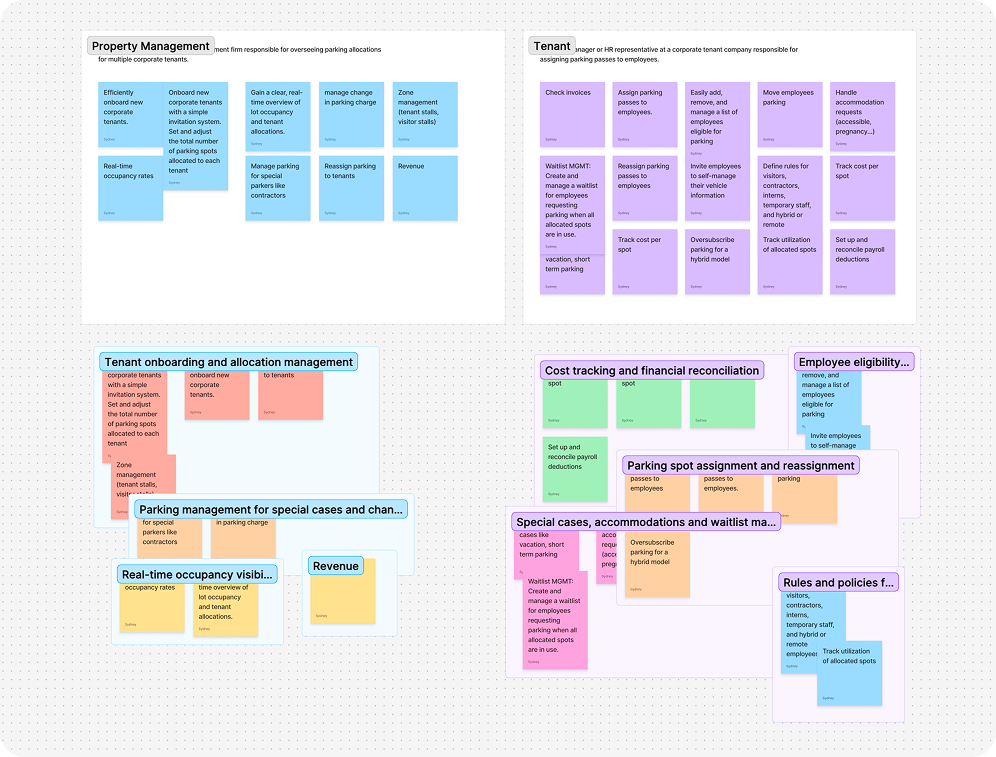
The problem was designing for all three at once, without one group’s convenience turning into another group’s extra work.
How it works
The mechanism I landed on treats a property’s spots as a shared pool instead of fixed assignments.
Say a property has 100 spots. Tenants see how many are available and pull from that pool, adding spots to their allotment as headcount grows and dropping them when it shrinks. Tenants then assign their allotted spots to individual employees, which feeds our internal enforcement app so the lot is enforced correctly.
Billing follows the allotment, not the assignment. A tenant pays for the spots they’ve claimed, not for how many are matched to an employee right now. That one decision solved the biggest pain point tenants raised in the survey. They wanted one predictable invoice, not a pile of booking charges that shifted every time someone joined or left.
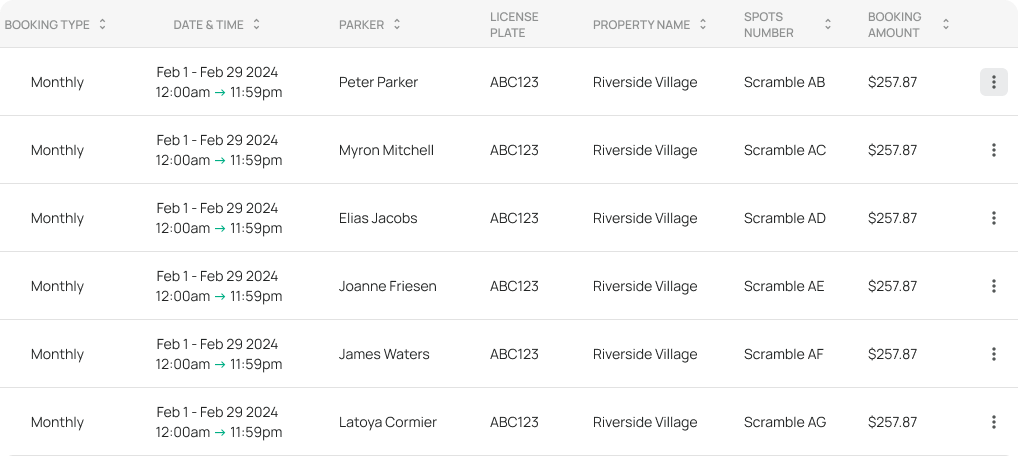
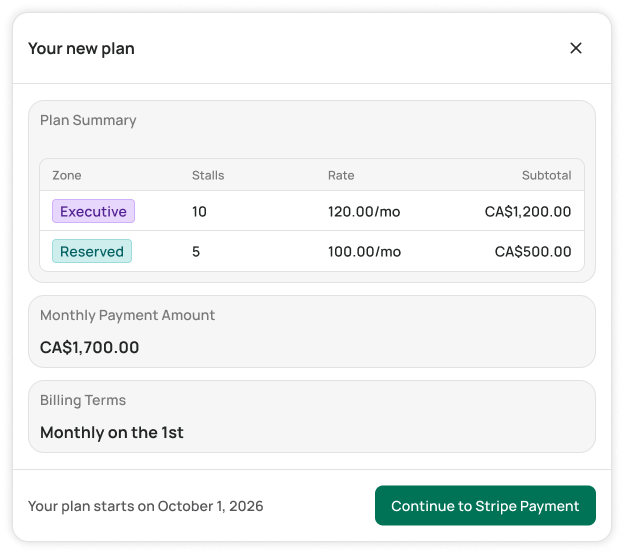
For the property manager, this meant almost hands off operation. Spots tenants weren’t using stayed open on the public marketplace, so nothing sat empty. In the initial scope, a property manager only had to approve spots being added to or removed from a tenant’s allotment. Day to day assignment and vehicle logs never landed on their plate.
Clients and ops both asked for a waitlist for when the pool runs out. It was scoped for a later version and left out of the MVP.
That one mechanism, a shared pool with billing tied to allotment, let three groups with competing goals use the same system without working against each other. Property managers stayed hands off. Tenants got predictable billing and room to flex with turnover. The enforcement app downstream got accurate, real time data, because everything traced back to one source of truth instead of three disconnected records.
What I designed, and what it was for
None of my screens shipped, and they weren’t meant to. My design work was a concept prototype, built to show stakeholders how the shared pool would work and win buy in to build it.
I pitched it to the CEO and the board. Alongside the prototype, I brought two pieces of evidence: an analysis of the Jira tickets tied to these clients, and the number of active users already buying and managing parking for their employees through workarounds.
The prototype walked through both sides of the mechanism:
- Property managers, built around visibility and occasional approval, not daily management
- Tenant admins, viewing pool availability, adjusting their allotment, and assigning spots to employees
- Tenant adminChecks how many spots are available in the pool
- Tenant adminRequests spots added to or removed from their allotment
- Property managerApproves the allotment change
- Tenant adminAssigns spots to individual employees
- SystemEnforcement app updates in real time
Employee facing screens were deliberately left out of the concept. That experience already existed in the public parking app, so building it again here would have duplicated work without solving a new problem.
Handoff and what happened after
I handed off after 3 months with the research, the concept, and the prototype. From there, a PM and design team designed and built the product, which launched 9 months after my first prototype.
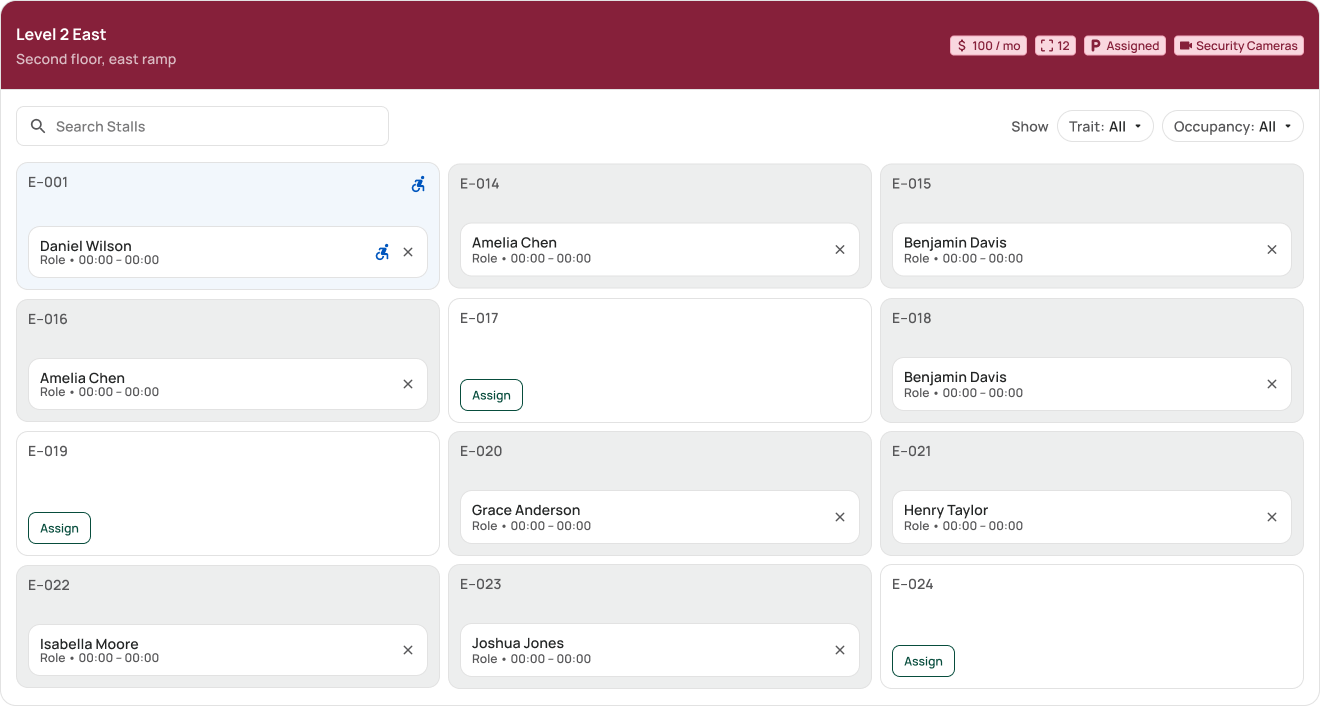
The core mechanism didn’t change. The shared pool, tenant driven allotment, and property manager approval flow all shipped the way I’d pitched them. The screens were the team’s work, and as the team and our internal toolkit grew, they built out spot allocation further than my original concept.
Where it stands
The product only just launched, so it’s early, but the first signals are good.
- 100% adoption from the original four clients who’d been running this manually, with no customer support needed to get them running
- 3 new prospective clients now in conversation because this feature set exists, with roughly $4M in potential revenue estimated from the contracts expected to move to this model after release
These four clients had spent months building their own workarounds to make do. Adopting the product without a single support ticket is a strong early sign the design matched how they needed to work.
What I’d do differently
Looking back, I’d have kept a light connection to the original four clients through the nine months between my prototype and launch, instead of stepping away fully at handoff. The core mechanism held up, but a gap that long is risky. Research assumptions can go out of date before a product ships, and I wouldn’t have known until the adoption numbers came in.
Let’s solve the right
problem together.