
Rebuilding guest checkout for a parking app’s fastest growing user, and closing the gaps a single-lane flow couldn’t handle
Role
Team
Timeline
Scope
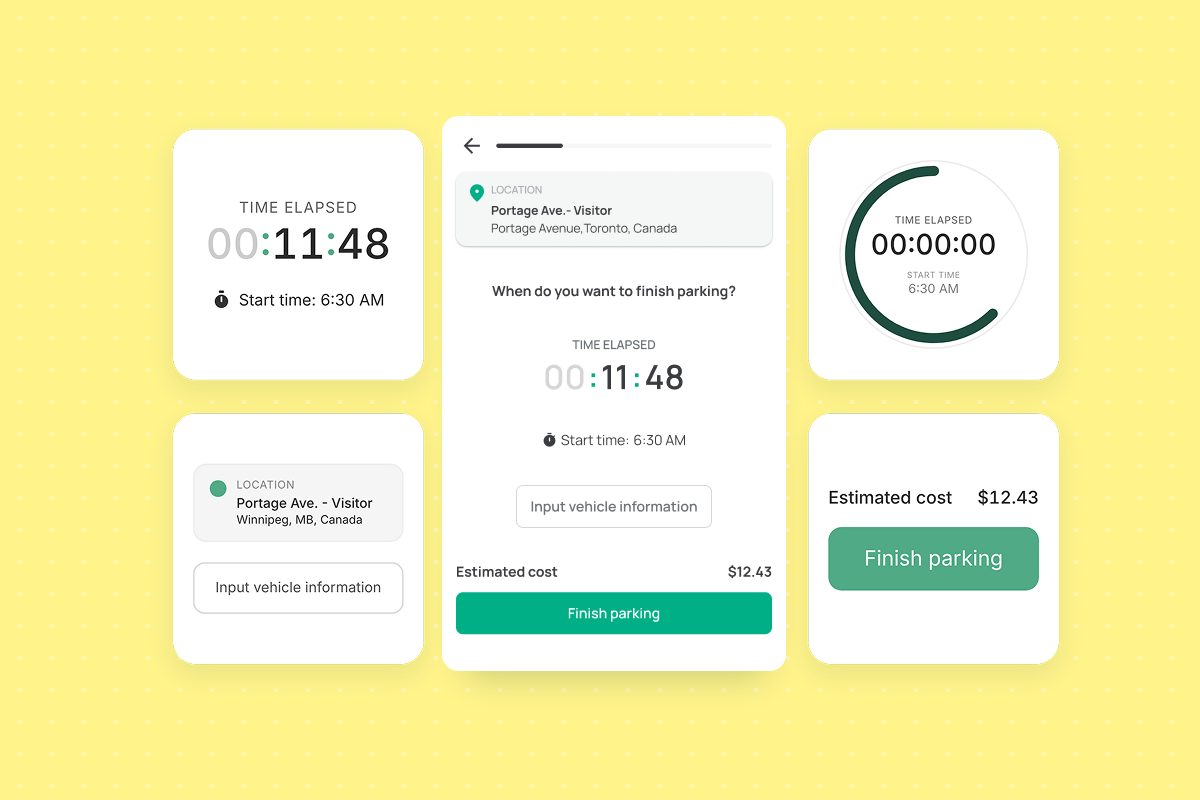
Impact overview
4%
checkout drop-off, with a back button on every step
2.5 min
to check out, with quick-select duration chips
Sold out
consistently at one event lot after flat-rate pricing launched
The fastest growing part of the app was also the most painful
Guest checkout usage had been climbing fast. More people were pulling into a lot and paying on the spot instead of booking ahead through an account. I was seeing the same shift in the app’s own booking data.
Seeing it in both places made it clear this was one trend, not two unrelated data points. Guest checkout hadn’t been built for it.
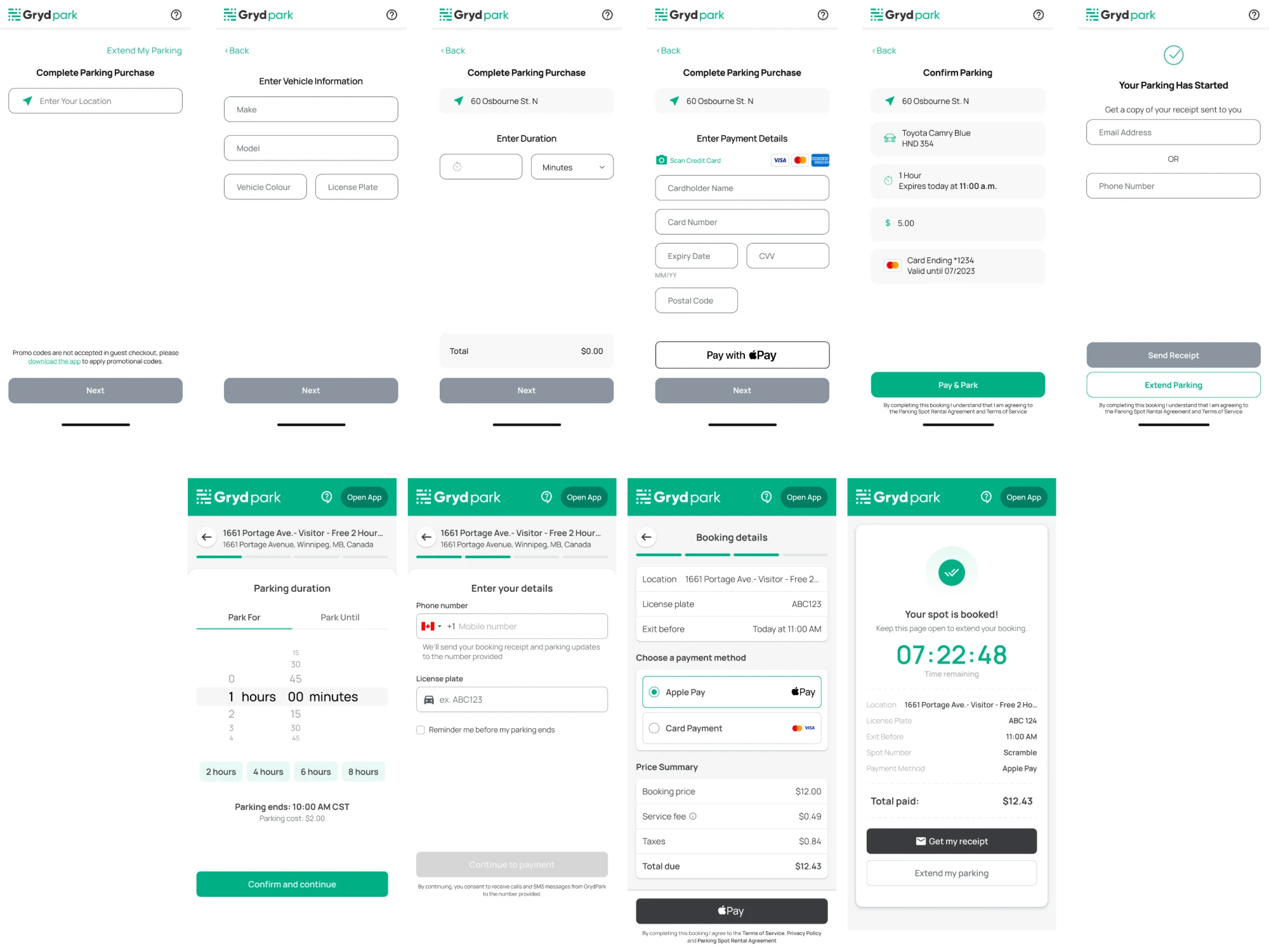
It was a 6 screen process: location, vehicle info, length of stay, payment, confirmation, then success. There was no back button anywhere in the flow. If a user needed to change anything, they had to close out and start over. For someone standing in a lot trying to pay quickly, that’s about as much friction as you can design into one task.
To see where people got stuck, I watched drivers check out in lots and worked through the open Jira bugs and support tickets tied to guest checkout. Beyond fixing the flow itself, that surfaced three gaps it had no way to handle:
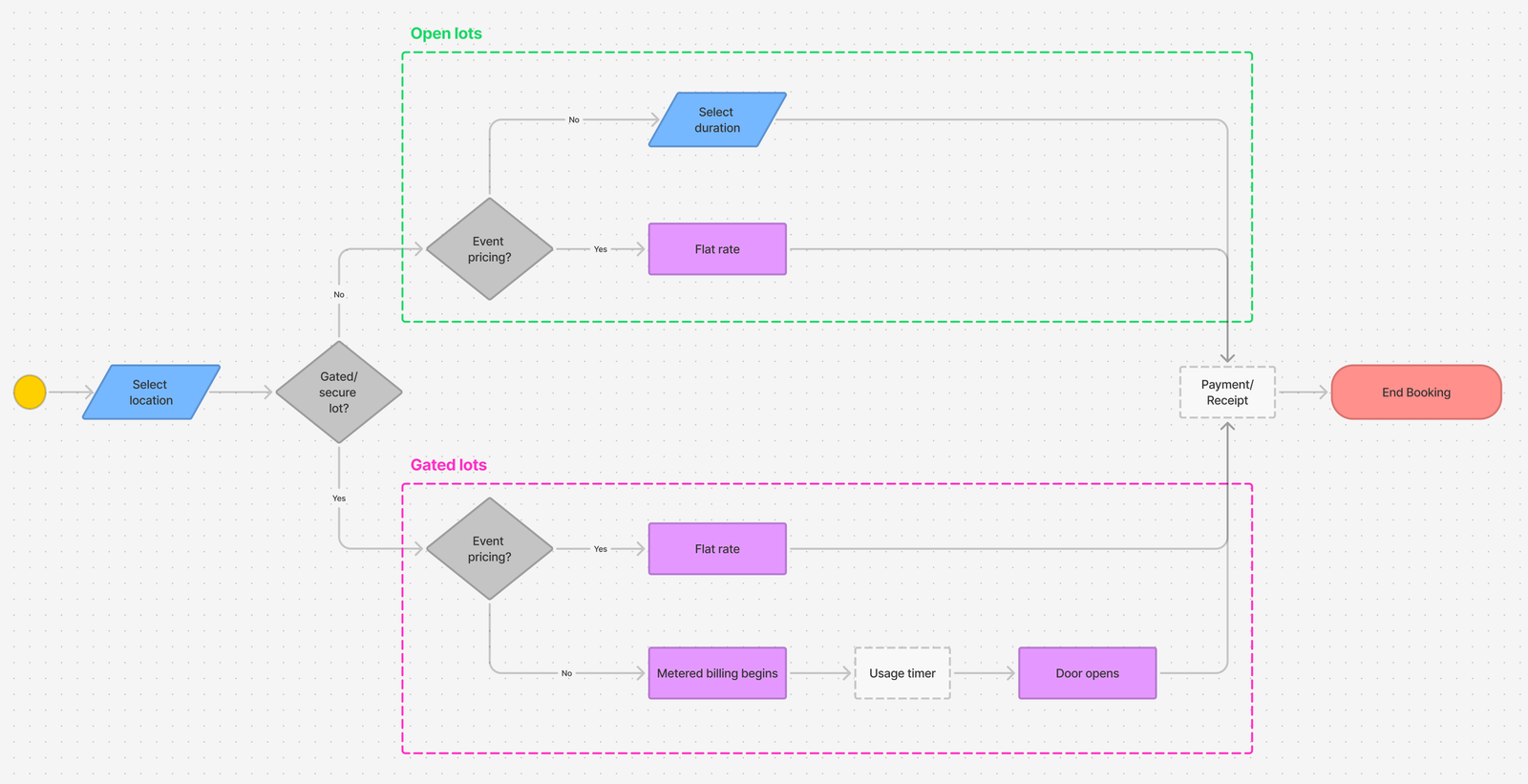
Gap 1: gated lots were invisible to the people who needed them most
Gated, secured lots only worked for users with an existing pre-booking. That was fine for planners, but it broke down for anyone who showed up without one, which was becoming the norm.
The clearest example was event parking. Someone would see an event parking sign, pull up to a gated lot expecting to pay and get in, and get stuck at the gate because the system assumed they’d booked ahead. The signage invited exactly the behavior the gate couldn’t support.
The fix: a guest scans a QR code to trigger the gate on entry, and can’t leave without paying first. (Designed and scoped, not yet released.)
Gap 2: no way to price flat rate demand periods
For high demand events, a normal hourly rate caused problems either way. Set too low, the lot filled instantly with no premium captured. Left uncapped, a guest could rack up a charge far higher than felt fair for an event.
Event parking solves this with a flat rate ops sets ahead of time, a fixed price for a fixed window (say, 6pm to midnight), however long the guest stays within it. It’s simple for guests to understand and predictable for ops to price. Since launch, one event lot went from an average of 4 of its 22 spots booked to selling out consistently. (Live.)
Gap 3: no true pay-as-you-go option for gated structures
Gated structures needed something closer to a traditional parking garage ticket, charging for the time used rather than an end time set upfront.
Metered pay-as-you-go bills in 15 minute increments, and guests pay and exit whenever they’re ready, with no need to guess how long they’ll stay. It only applies to gated structures, since it depends on the gate to control entry and exit. (Designed and scoped, not yet released.)
Rebuilding the flow
The original flow pushed guests through 6 disconnected screens, including one asking for length of stay by the minute, even though the system only worked in 15 minute increments. Small mismatches like that added friction for no reason.
The new flow has four steps. Location fills in automatically from geolocation. Vehicle info is cut down to plate and phone number. Duration gets its own step because it changes when an event flat rate is in effect, and it uses quick-select chips based on average stay lengths instead of asking guests to type a number. Payment and confirmation now share one screen, followed by success.
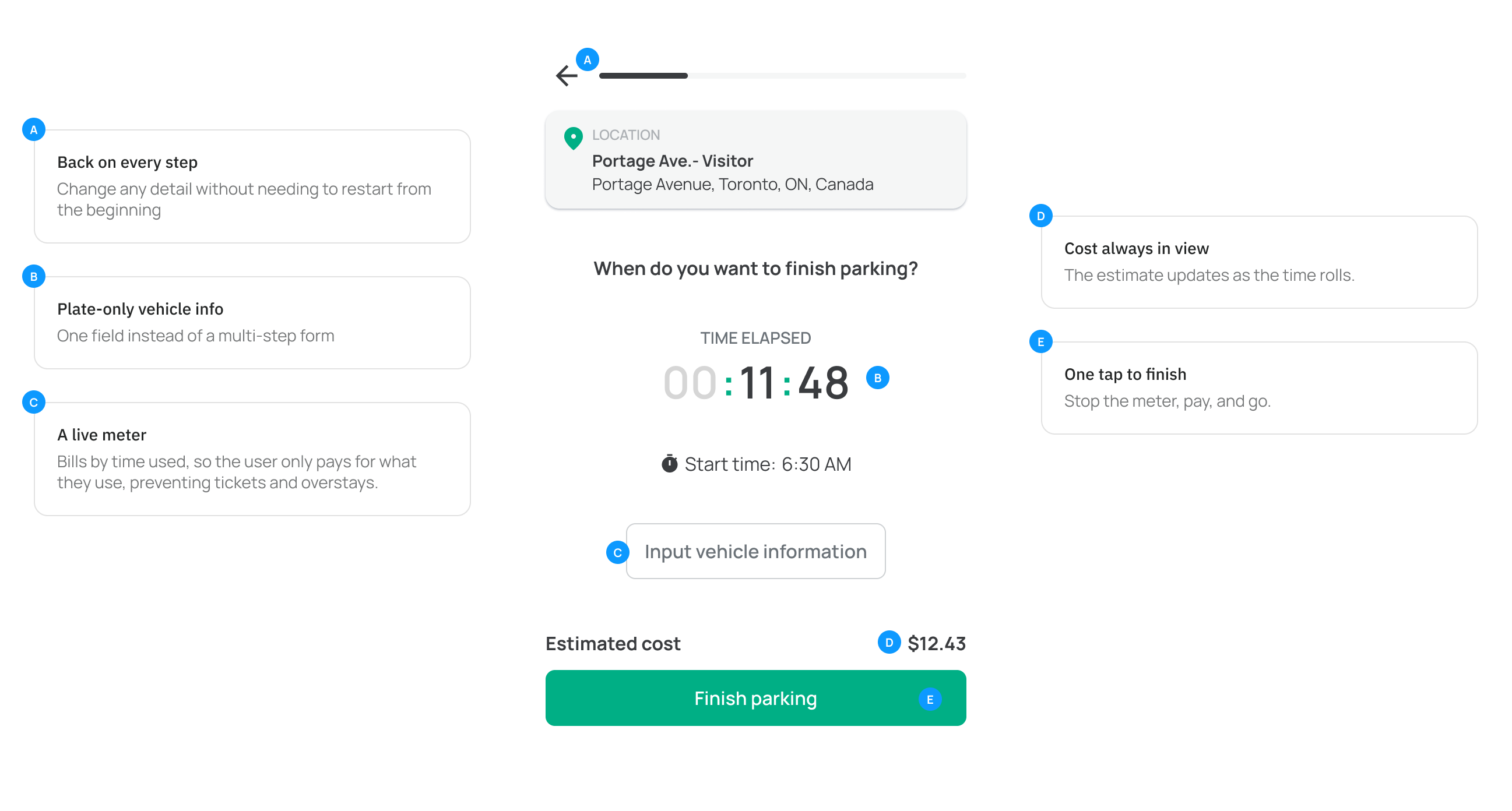
The outcome
I led this end to end as PM, designer, and researcher, working with 4 engineers to rebuild the core flow and launch event parking. Gated access and metered pay-as-you-go are fully designed and scoped, ready for their own release once prioritized.
What I’d do differently
Gated access is the flow I’d most want to validate with real users before it goes live. Getting stuck at a gate that won’t open until you’ve paid is a much higher stakes moment than a slow checkout screen, and right now that flow is only validated on paper. With more room in scope, I’d run a small real world pilot for it before a full release, since an edge case nobody planned for could go badly.
Let’s solve the right
problem together.